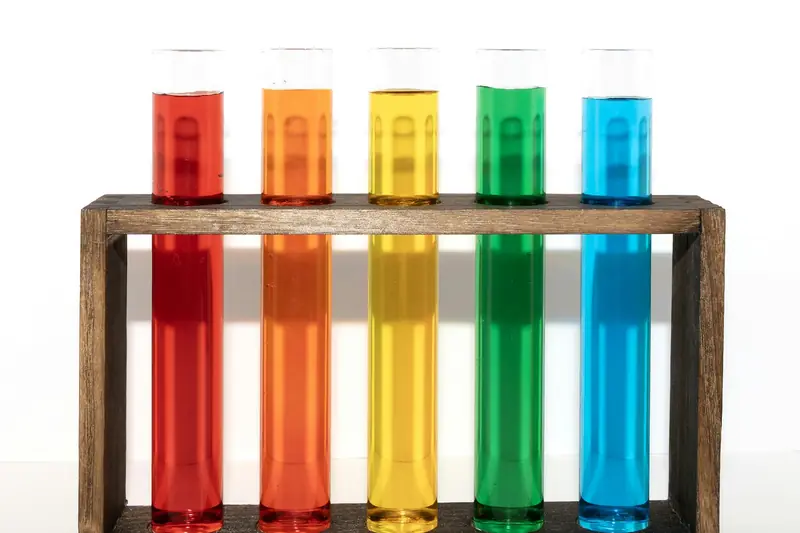
Pool Chemistry for Beginners: The Numbers That Keep Water Safe
The CDC chlorine and pH targets for pools and hot tubs, plus a weekly routine.
Quick answer
Keep free chlorine at at least 1 ppm in a pool and at least 3 ppm in a hot tub, with pH between 7.0 and 7.8 in both (CDC). Test chlorine and pH at least twice a day, and follow the product label for every dose.
Jump to section
Why free chlorine and pH matter most
Free chlorine is the part of the chlorine in your water that is ready to kill germs. pH tells you how acidic or basic the water is, and it decides how well that chlorine works.
The CDC explains why pH matters. Higher pH lowers chlorine's germ-killing power, especially above 8.0. A pH below 7.0 kills germs faster but makes pipes more likely to corrode (CDC). That is why the target sits in a narrow band.
Chlorine does not stay put. Urine, feces, sweat, body dirt, sunlight and misting hot tub jets all lower chlorine levels (CDC). More swimmers, a hot day or a busy tub means you will need to test more often.
Time matters too. The CDC gives approximate kill times at 1 ppm free chlorine, pH 7.5 and 77°F, with no cyanuric acid. E. coli O157:H7 takes under 1 minute, Hepatitis A about 16 minutes and Giardia about 45 minutes. Cryptosporidium takes about 15,300 minutes, or 10.6 days (CDC). Cyanuric acid makes disinfection slower.
Target ranges for pools vs hot tubs (CDC table)
The CDC gives separate free chlorine minimums for pools and hot tubs, and one pH range for both (CDC).
| Water | Free chlorine | pH |
|---|---|---|
| Pool, no cyanuric acid | At least 1 ppm | 7.0 to 7.8 |
| Pool that uses cyanuric acid | At least 2 ppm | 7.0 to 7.8 |
| Hot tub | At least 3 ppm | 7.0 to 7.8 |
The CDC gives no targets for alkalinity or calcium hardness. One maker, Pentair, lists pre-closing targets for above-ground pools: pH 7.2 to 7.6, total alkalinity 80 to 120 ppm, calcium hardness 175 to 250 ppm and chlorine 1 to 3 ppm (Pentair). Treat those as the maker's figures. Use the CDC range as your safety range, and Pentair's pH as a tighter comfort target inside it.
Testing: DPD kits vs strips
The CDC says a DPD test kit is the most accurate option, and test strips are less accurate (CDC). A DPD kit gives you a number you can trust more than a strip.
Test chlorine and pH at least twice a day, and more often when many people use the pool or hot tub (CDC).
Know one trap. Above 10 ppm chlorine the test may bleach out and read falsely low or zero (CDC). If you just shocked the pool and get a zero, the reading may be wrong, so do not trust it on its own. Our guide to the best pool test kits compares methods, ranges and refills.
Cyanuric acid: the help and the trade-off
Cyanuric acid is sold as a stabilizer. It is also in dichlor and trichlor products, so you may be adding it without noticing.
Here is the CDC's guidance. If your pool uses cyanuric acid, keep free chlorine at least 2 ppm, not 1 ppm. And the CDC recommends not using cyanuric acid, or products that contain it, in hot tubs (CDC). The trade-off is speed: cyanuric acid makes disinfection slower.
Check product labels before you buy. If a chlorine product lists cyanuric acid or stabilizer, keep it out of the hot tub.
Raising and lowering pH safely
Because pH controls how well chlorine works, it is the number most people adjust. We do not give doses here. The amount depends on your pool's volume, your product and your current reading, so follow the product label every time.
What we can say comes from the CDC. If pH rises, chlorine loses germ-killing power, especially above 8.0. If pH falls below 7.0, germs die faster but pipes are more likely to corrode (CDC). The goal is to keep pH inside 7.0 to 7.8.
Retest after each change and write it in a log. A saltwater generator does not change this: you still test pH and adjust it the same way.
Handling and storing chemicals
Pool chemicals send people to the emergency room. CDC estimated 4,535 US emergency department visits a year from pool chemical injuries in 2008 to 2017 (CDC 2019). In a closer look at 2015 to 2017 visits, the top diagnosis was poisoning from breathing fumes, vapors or gases, for example when opening chlorine containers.
Read each label for how to open, measure and store the product, and keep every product separate from the others.
A simple weekly routine
Use this routine to keep the numbers steady. Test at least twice a day as the CDC advises, and use the rest as a weekly check.
- Test free chlorine and pH. Aim for at least 1 ppm in a pool, at least 3 ppm in a hot tub, and pH 7.0 to 7.8.
- Adjust only what the test shows, following each product label.
- Take debris out of the water with a robotic cleaner or a vacuum.
- Log your readings and what you added.
- To check combined chlorine, read how to shock a pool.
For hot tubs, our inflatable hot tub care guide builds on these same numbers with temperature and cover advice.
Gear that helps
-
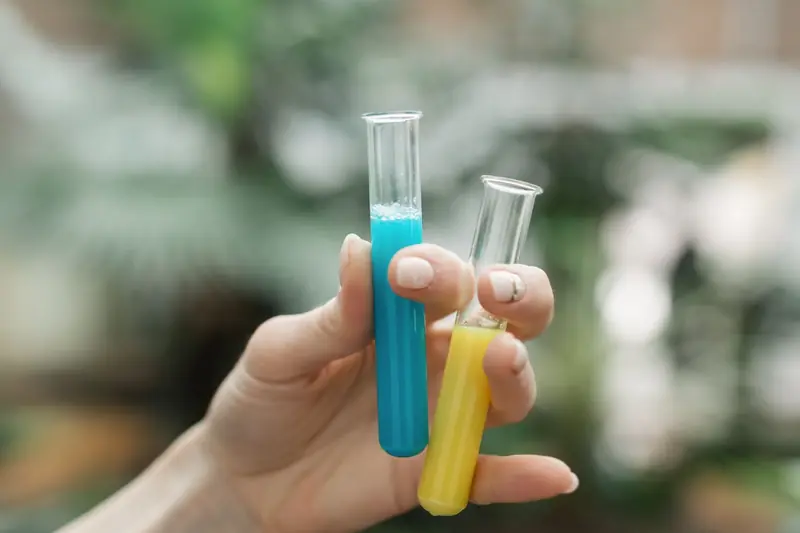
Best Pool Test Kits and Test Strips
A DPD kit or a good set of strips is how you check the two numbers that matter most.
-
Best Saltwater Chlorine Generators for Pools
A saltwater generator makes chlorine for you, but you still test to the same targets.
-
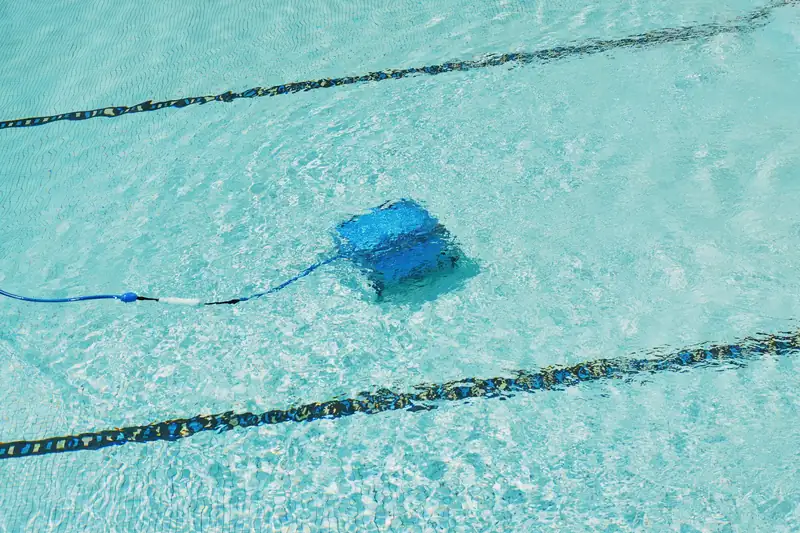
Best Robotic Pool Cleaners for Inground Pools
A robot removes debris, but it does not sanitize, so you still test.

FAQ
What should free chlorine be in a pool?
At least 1 ppm, or at least 2 ppm if the pool uses cyanuric acid, with pH 7.0 to 7.8 (CDC).
What should free chlorine be in a hot tub?
At least 3 ppm, with pH 7.0 to 7.8, and no cyanuric acid (CDC).
Why does my chlorine test read zero right after shocking?
Above 10 ppm the test may bleach out and read falsely low or zero (CDC).
Related
-
Buying guide
Best Pool Test Kits and Test Strips
DPD kits, strips and digital testers, compared on what they measure.
-
Buying guide
Best Saltwater Chlorine Generators for Pools
Pool rating, output, cell life and power type, side by side.
-
Buying guide
Best Robotic Pool Cleaners for Inground Pools
Pool size rating, coverage, power and filtration, side by side.
-
Buying guide
Best Inflatable Hot Tubs
Seats, heater, jets, cover lock and winter limits, side by side.
-
Guide
How to Shock a Pool Safely (and When You Need To)
Combined chlorine, the 10x rule, steps and chemical safety, from public-health sources.
-
Guide
Inflatable Hot Tub Care: Water, Heat and Winter Basics
CDC chlorine and pH targets, CPSC temperature limits and cold-weather basics.

Get the weekly pool and hot tub checklist
A one-page printable checklist with the CDC water targets and the safety checks to run every week. Free, and sized to stick on the pool shed door.